




Locks and doors wear on a schedule set by traffic, not by chance.
A commercial lock does not fail suddenly. The screws in the top hinge back out a little at a time. The closer gets slower and the door starts resting against the latch instead of throwing it. The cylinder gets stiff on cold mornings. Staff adapt: a hip, a pull, a jiggle of the key. Then on a Tuesday evening the lock will not lock at all and it is an emergency locksmith call.
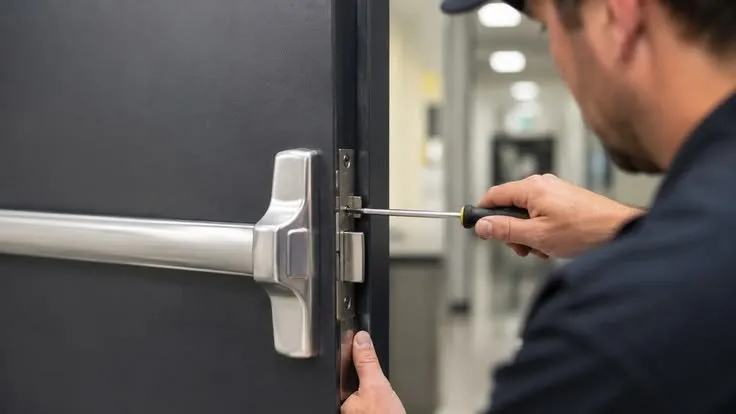
A tune-up interrupts that timeline. We go over each lock the way it wears: the cylinder, the lever or exit device, the strike and how fully the latch enters it, the gaps around the door, hinge screws, the closer’s sweep and latch speed. Most of what turns up is a small adjustment, which is the point of a locksmith looking before anything has broken.
Scope follows the property rather than the lock. One entrance giving trouble is tuned on a single visit. A property going over its locks once or twice a year, more often at the openings taking the traffic, catches most of this while it is still adjustment. Across a multi-tenant building that is usually the handful of locks doing most of the work: the main entrance, the employee entrance, the stockroom, the ones with a closer working against weather. Routine rekeying and hardware checks can ride along on the same visit.
Maintenance is not a repair budget. A tune-up is adjustment, so when it finds the frame that has racked past adjustment, the closer that is leaking oil or the cylinder that is worn out, that is a repair of its own, scoped and priced with you before it is done. It also cannot cover a lock that has already stopped securing tonight: that is emergency work, not scheduled work. What it does is make the second kind of call rarer.
Where we do this work
- Offices
- Storefronts
- Restaurants
- Apartment & condo properties
- Warehouses
- Medical facilities
- Multi-tenant buildings
What’s included
-
Locks and cylinders
Keys worked through every lock on the visit, so a cylinder that is getting stiff is found before it strands somebody outside.
-
Strike and latch
Checked for whether the lock’s latch is entering the strike fully or just catching the lip, which is where "the lock won’t catch" starts.
-
Alignment
The gaps around the door read for sag and racking, and hinge screws re-seated before the lock drops far enough off its strike to drag.
-
Closer settings
Sweep and latch speed brought back to where the door closes under control and the lock latches on its own.
-
Exit and entry hardware
Levers, pulls and exit devices on the doors that take the most hands, checked for loose fixings and worn trim.
-
Routine rekeying on the same visit
Where a tenant has changed or a key is unaccounted for, the rekeying happens while the locksmith is already on site.
Triggers
When a lock is telling you early
Most of these are the quiet version of a locksmith call we would otherwise get at 9pm.
-
You are calling about the same lock again
Twice is a pattern. Something underneath the lock is moving and the fixes are only resetting the clock.
-
Your staff have a technique for the front door
Lift it, lean on it, jiggle the key. People stop reporting a lock once they have learned how to work around it.
-
A tenant is turning over and the unit is empty
The easiest time to go through its locks properly, and the natural moment to rekey them as well.
-
You only hear about locks when they break
If every lock on the property reaches you as an emergency, nothing is being looked at in between.
FAQ
Tune-ups, the questions we actually get.
Don’t see yours? Call (857) 327-1767
What does a lock tune-up cost?
It depends on how many locks are on the visit and what they need, which is why we would rather look than quote blind. Adjustment work is labor: resetting a closer, re-seating hinge screws, moving a strike, freeing a cylinder. Anything that needs a part is a separate job with its own scope and price, agreed with you before it starts, and with no hidden fees either way.
How often should our locks and doors be serviced?
Most properties look at their locks once or twice a year, and more often on the openings that take the traffic. A rear entrance that a hundred people shoulder through every day loosens much more quickly than an interior office lock that gets used twice. That is guidance rather than a plan: tell us how the openings are actually used and we will tell you which locks want looking at sooner than the rest.
We have maintenance staff. What would a locksmith find that they do not?
Your people are at these doors every day, which is worth more than it sounds, and most of what they do to a lock is the right thing to do. What a locksmith adds is the hardware’s own failure pattern: that a door dragging at the bottom usually starts with hinge screws letting go at the top, that a latch catching the lip of a strike is a few months from not latching at all, that a door no longer pulling itself shut is a sweep and latch adjustment rather than a new closer, that a cylinder needing a jiggle is a cylinder on its way out. Those are the ones that get tightened, worked around, and tightened again.
What happens if a lock turns out to need a part?
The tune-up itself is the checking and the adjusting. When a visit finds a closer leaking oil, a frame bent past straightening or a cylinder worn out, that is lock repair or replacement work, and you get told what it is and what it costs before anybody starts on it. Common commercial lock hardware is usually available and less common hardware is ordered in, so some of that gets handled while we are there and some of it comes back as a second visit.
Will this stop emergency locksmith calls?
It reduces them, and nobody can honestly promise more than that. A door somebody drives into at midnight was never going to be caught by maintenance. What maintenance catches is the long, predictable kind of failure: the sagging door, the closer that stopped latching, the lock that got harder to turn for six months before it stopped turning.
Will the doors be out of use while you work on the locks?
Mostly not. The adjusting is done with the door hung where it is: hinge screws re-seated, a strike moved, the closer’s sweep and latch speed reset, a key worked through each cylinder, so a lock goes back into service as we finish it rather than standing shut for the visit. The exception is a lock that turns out to need a part, which stops being a tune-up and gets handled as the repair it is, at a time you agree to.
Can a locksmith do this outside business hours?
Yes. We work 24/7 across Boston and the surrounding 30-mile area, so locks in a lobby, a restaurant or a clinic can be worked on when nobody is trying to walk through them. For multi-tenant buildings that usually means fewer notices to post and fewer tenants held up.
Emergency
Break-in, failed lock, or locked out?
When your property’s security is compromised, our emergency locksmiths respond immediately to repair locks, replace compromised cylinders, and restore reliable operation.
- Commercial Lockouts
- Break-In Lock Repairs
- Emergency Cylinder Replacements
- 24/7 After-Hours Response
Request a quote
Request a quote
Our client services team is standing by to assist with locksmith services, lock changes, high-security hardware, master key systems, lock repairs, rekeying, and emergency security dispatch!
- Hours
- Monday – Sunday: 24/7 Service
- Service area
- Boston and surrounding 30-mile radius
Fully insured by Hiscox
- Google rating
- Verified Screened professionals
- Hiscox Fully insured
- Transparent pricing No hidden fees