
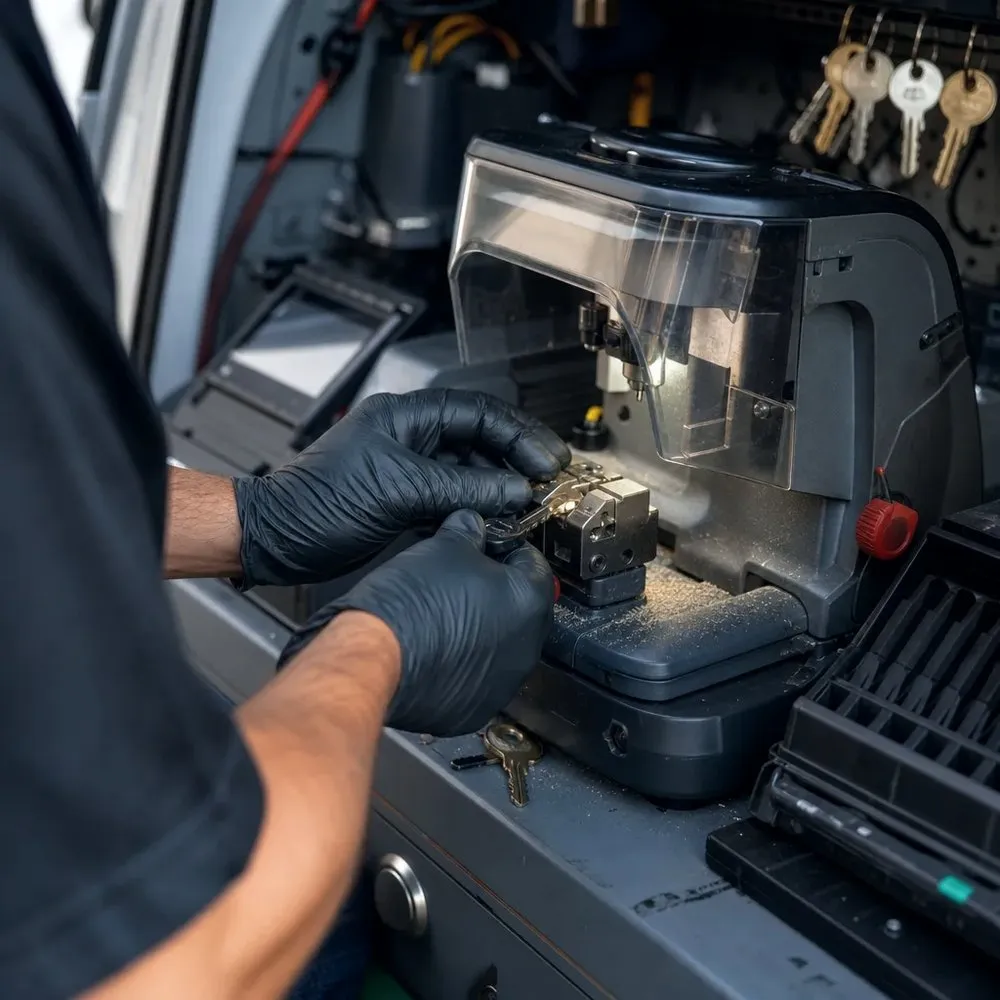




One plan, pinned into the cylinders.
A building grows into its keys. One door gets a lock, then a suite is split and the incoming tenant needs a key the last one shouldn’t have. A few years in, the manager carries a ring of twenty, and nobody opens the electrical closet without finding the one person who keeps that key in a drawer. The building has locks, but no plan behind its keys.
A master key system is that plan, pinned into the cylinders. Each lock is built to accept more than one key: a change key that opens that lock only, and a higher-level key that opens it along with others. A change key for one office, a sub-master for a floor, a grand master above both. Extra pins in each stack, cut to the right heights, are what make the second key valid.
The decision that matters is made before anything is cut. Who holds which level, which locks share a sub-master, and which stay off the master altogether (server rooms and cash offices usually do) is a decision about your organization that the building then lives with. We write the keying schedule down and hand it over, so the next change is worked from the plan rather than started fresh. Scope runs from one department to a whole property, and we rekey existing commercial locks into a new system wherever the cylinders are sound.
A master system is also the wrong answer to some of the problems people bring to it. If a manager left and still has a key, you don’t need a hierarchy, you need the old keys retired, and that is rekeying. And master pinning does nothing about duplication: nothing in a hierarchy stops someone walking a change key into a shop and having a copy cut. That control is a separate mechanism, built on restricted keys.
Where we do this work
- Offices
- Storefronts
- Restaurants
- Apartment & condo properties
- Warehouses
- Medical facilities
- Multi-tenant buildings
What’s included
-
Access levels mapped to the building
Who opens what, set against how the property actually operates rather than how the floor plan looks.
-
A single master key for owners and managers
Broader access on one key, instead of a ring that grows every year.
-
Change keys limited to the locks that need them
Staff carry what their job requires and nothing else.
-
New systems designed and installed
Planned from the keyway up, including the locks deliberately left off the master.
-
Existing locks rekeyed into the system
Hardware stays on the door where it’s sound, and the keying changes around it.
-
Maintained and extended as you grow
New locks brought into the plan, and the keying schedule handed over so the next change is worked from it rather than from scratch.
Triggers
When a building has outgrown its keys
Master keying is the locksmith’s answer when the number of keys has stopped matching the number of decisions you actually want to make.
-
You’re carrying twenty keys and still can’t open everything
Years of locks added one at a time, each with its own key and no relationship to the others.
-
A manager can’t get into an area without borrowing someone’s key
Supervision shouldn’t depend on tracking down whoever has the right key today.
-
Cleaners or contractors need some doors and not others
Handing over a ring is the usual workaround, and it gives away far more than intended.
-
You’re taking on another floor, suite or tenant
A new area is the moment to decide the structure, before the keys multiply again.
FAQ
Master keying, the questions we actually get.
Don’t see yours? Call (857) 327-1767
What does a master key system cost?
It depends on the lock count and on how many levels the plan needs, because the labor is in the planning and the pinning, not in the key. Rekeying sound cylinders into a new system costs less than replacing hardware that can’t be master keyed, so part of the answer comes from what’s already on your doors. You’ll get the scope and the price up front, with no hidden fees.
Can you master key the locks we already have?
Often, yes. Many commercial cylinders can be pinned to accept a master as well as their own key, and where that works we rekey what’s on the door. Where a cylinder can’t take it, or where the keyway is too limited to carry the levels you want, we’ll tell you which locks need different hardware instead of forcing the plan onto locks that won’t hold it. Common commercial cylinders are generally available in the trade and less common ones are ordered in, so a property is usually cut over in planned stages rather than left half keyed while a lock waits.
Is this the same as having all our locks keyed alike?
No, and the difference is the whole point. Keyed alike is one key and one level: everyone holding that key opens every lock it was cut for, which is simple and often enough for a handful of doors used by the same few people. A master system puts two valid keys into each cylinder, a change key for that lock and a higher-level key above it, so one person can be given less than another. If keyed alike covers what you actually need, we’ll say so rather than build a hierarchy on top of it.
Does this mean more keys or fewer?
Fewer keys per person, and more thought in the plan. A master system doesn’t reduce the number of locks, it reduces how many keys each person has to carry to do their job. The complexity moves off the key ring and into the keying schedule, which is where it belongs. That schedule, what is keyed to what and which key sits at which level, is written down and handed to you, and it is what the next change gets worked from.
What happens if the master key is lost?
That is the real exposure in any hierarchy, and it’s worth knowing before you build one. A missing master is a key to everything it was cut for, so the honest fix is to rekey the locks it opened. It’s also the reason a good plan keeps the top level in very few hands and uses sub-masters for everyone else.
Is a master key system less secure than separate keys?
It’s a trade, and the planning is what decides which way the trade goes. More levels mean more valid combinations inside each lock, so levels are worth adding only where they earn their place. Separately, a master system is not key control: if you need to stop copies being cut, that comes from a restricted key system, which can be planned into the same hierarchy.
Can this be done outside business hours?
Yes. We work 24/7 across Boston and the surrounding 30-mile area, so a floor can be rekeyed into the system overnight or on a weekend rather than while tenants and staff are trying to use the doors.
Emergency
Break-in, failed lock, or locked out?
When your property’s security is compromised, our emergency locksmiths respond immediately to repair locks, replace compromised cylinders, and restore reliable operation.
- Commercial Lockouts
- Break-In Lock Repairs
- Emergency Cylinder Replacements
- 24/7 After-Hours Response
Request a quote
Request a quote
Our client services team is standing by to assist with locksmith services, lock changes, high-security hardware, master key systems, lock repairs, rekeying, and emergency security dispatch!
- Hours
- Monday – Sunday: 24/7 Service
- Service area
- Boston and surrounding 30-mile radius
Fully insured by Hiscox
- Google rating
- Verified Screened professionals
- Hiscox Fully insured
- Transparent pricing No hidden fees