




Reset who can open the lock, not what is on the door.
Every commercial property eventually loses track of its keys, and it is the most common reason a business calls a locksmith. An employee leaves without returning theirs. A tenant moves out and nobody knows how many copies were cut over three years. A key goes missing and no one can say where. In each case the lock still works perfectly. The problem isn’t the lock, it’s that you no longer know whose key opens it.
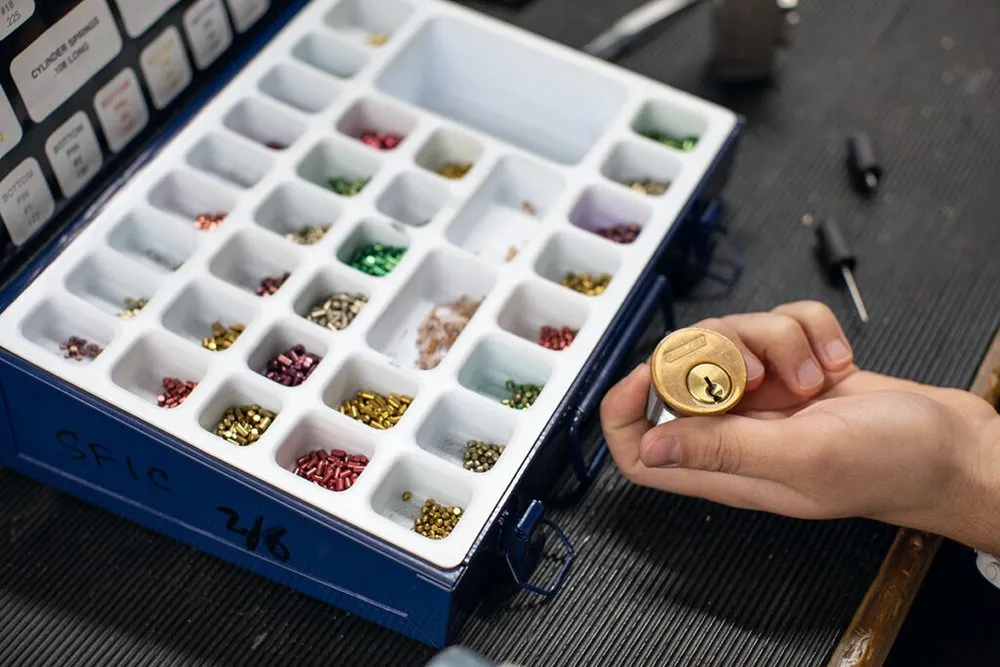
Rekeying fixes exactly that. The locksmith takes the cylinder apart, re-pins it to a new key and puts it back. The lock, the lever and the strike all stay where they are. Nothing is drilled, and nothing is cut into the door. What changes is the key that operates them: the new one works, every older copy doesn’t. For most commercial properties that’s the difference between a service call and a hardware bill.
We rekey single locks and whole buildings. One cylinder is a short job on the bench. Across a property we plan the keying first (which locks share a key, which stay unique, who needs to carry what), so you finish with fewer keys in circulation rather than more. If the building already runs on a master key system, we rekey into it, so the existing master keeps working.
Rekeying does assume the lock itself is sound. If a cylinder is worn, sticking or damaged, re-pinning it only resets a failing part. We’ll say so when replacement is the better call instead of rekeying something that will fail again in six months.
Where we do this work
- Offices
- Storefronts
- Restaurants
- Apartment & condo properties
- Warehouses
- Medical facilities
- Multi-tenant buildings
What’s included
-
Employee turnover
Old staff keys stop working the same day, without touching the hardware.
-
Tenant changeover
A clean key set for the incoming tenant, documented so the next change is simple.
-
Lost or stolen keys
The missing key is retired rather than chased.
-
One lock or every lock
A single cylinder, or every lock in the building to one plan.
-
Rekeying into an existing master system
Staff keys change, the master keeps working.
-
Keying alike
Fewer keys that open more of what each person actually needs.
Triggers
When it’s time to rekey
Rekeying is almost always a reaction to a change in who holds keys, not to a lock that stopped working.
-
Someone left and didn’t hand their key back
Resignations, dismissals, a contractor who finished months ago.
-
A tenant has moved out, or a new one is moving in
You inherit every copy the last tenant made, and no record of them.
-
A key has gone missing and nobody can account for it
A lost key is an unknown, and unknowns don’t expire on their own.
-
You’ve lost count of how many copies exist
Years of quiet duplication, one convenience at a time.
FAQ
Rekeying, the questions we actually get.
Don’t see yours? Call (857) 327-1767
Is rekeying cheaper than replacing the locks?
Usually, because you keep hardware you already own: you’re paying for labor and a new key set instead of new lock bodies. It stops being true when a lock is worn enough that it needs replacing anyway, and we’ll tell you which situation you’re in before we start. Either way the price is quoted up front, with no hidden fees.
What happens when I call?
We ask what changed and how many locks are involved. For a property-wide job we agree the keying plan with you first, so you know which key opens what before anything is cut, and nothing is ordered that the building doesn’t need.
Will my old keys still work?
No, and that’s the point. Once a cylinder is re-pinned, only the new key operates it. Every copy cut from the old key stops working, including the ones you don’t know about.
Does rekeying stop people from making copies of the new key?
No. Re-pinning changes which key turns the cylinder, not who is able to cut another one, and a standard commercial keyway takes blanks that sit in a bin at any counter. Rekeying is the right answer when the question is whose keys still work. When the question is how many copies will exist a year from now, that control comes from a restricted key system instead.
Can you rekey all my locks to one key?
Often, yes, if the cylinders are compatible. Where they aren’t we’ll say so and give you the options. Sometimes swapping two cylinders is what lets the rest of the property key alike.
How long does it take?
It depends on the lock count, and on whether a new keying scheme is being planned at the same time. Re-pinning one cylinder is quick work; a building takes as long as the plan behind it. You’ll know the scope before anything starts.
Can you rekey after hours?
Yes. We work 24/7 across Boston and the surrounding 30-mile area, so a locksmith can rekey after a break-in or a late shift change without waiting until morning.
Emergency
Break-in, failed lock, or locked out?
When your property’s security is compromised, our emergency locksmiths respond immediately to repair locks, replace compromised cylinders, and restore reliable operation.
- Commercial Lockouts
- Break-In Lock Repairs
- Emergency Cylinder Replacements
- 24/7 After-Hours Response
Request a quote
Request a quote
Our client services team is standing by to assist with locksmith services, lock changes, high-security hardware, master key systems, lock repairs, rekeying, and emergency security dispatch!
- Hours
- Monday – Sunday: 24/7 Service
- Service area
- Boston and surrounding 30-mile radius
Fully insured by Hiscox
- Google rating
- Verified Screened professionals
- Hiscox Fully insured
- Transparent pricing No hidden fees